Tag Archives: news

Fintan Vallely gets down to brass tacks in his new book

Dublin can be heaven if you are seeking cultural stimulation, and the Hodges Figgis’ bookshop is a good place to look. In June, I was fortunate to be there for the book launch of Camarade by my friend, Theo Dorgan. The audience was studded with poets, writers, scholars, musicians, and sundry cognoscenti: I was perhaps the most anonymous attendee. I sat next to a distinguished-looking gentleman with a lilting Northern accent. We chatted amiably, but initially I did not catch his name.

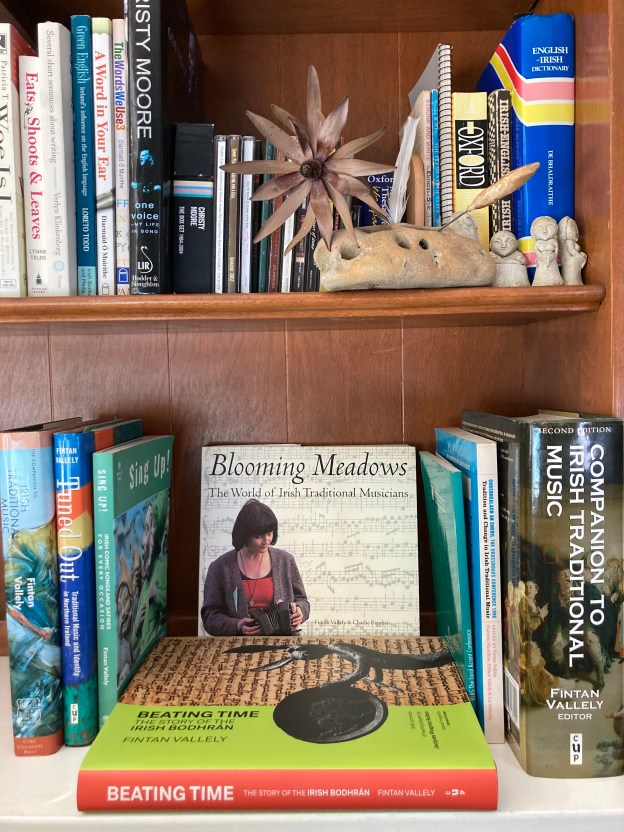
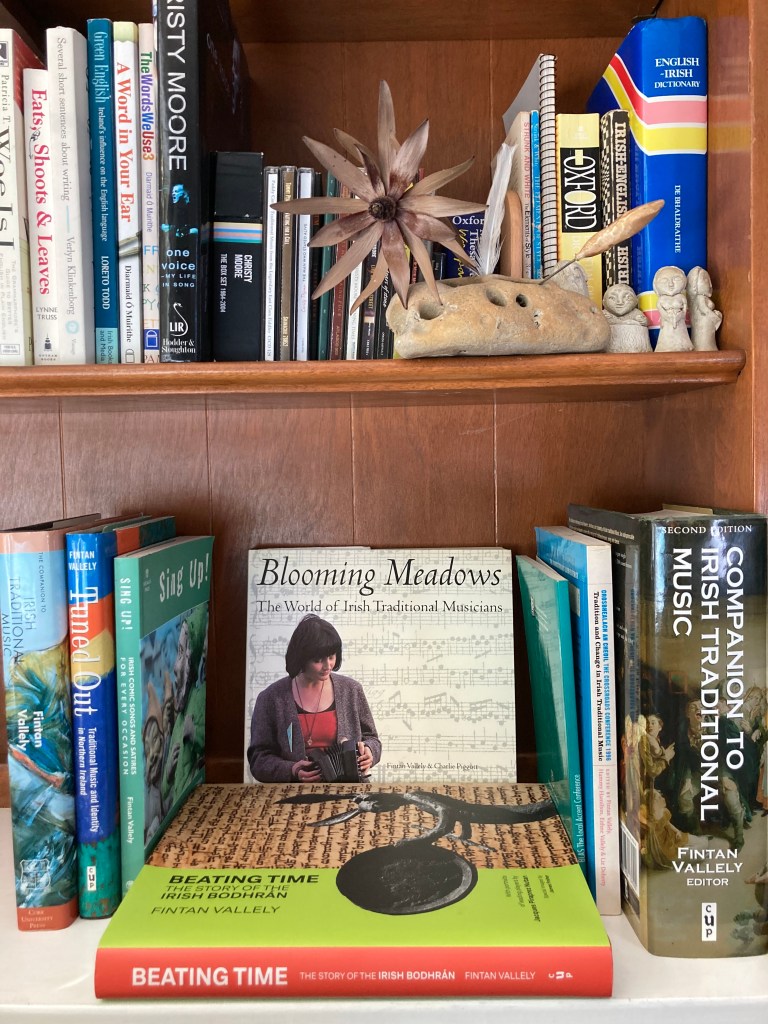
Imagine my astonishment, then, when I realized I was talking with Fintan Vallely, Ireland’s preeminent expert on Irish traditional music and a highly accomplished flute player. He has been writing, speaking, teaching, and advocating for traditional music for over fifty years. I have a decent collection of his writing, suitably curated in the title photograph. I have relied upon his books and articles as sources of sound information (especially the series of Companion Guides), stimulation, and writing inspiration.

His newest book, Beating Time: The Story of the Irish Bodhrán, explores the history of Ireland’s favored percussion instrument. The frame drum is not nearly as old as many people think. Vallely dates its high-profile arrival in Irish music to 1959, when it featured in the music for Sive, John B. Keane’s play, at the Abbey Theater. Sean O’Riada was the Abbey’s music director, and he was drawn to the drum’s possibilities. He made room for a bodhran player, Peadar Mercier, when he created a new ensemble, “ceili” band, Ceoltóirí Chualann  (“The Band that Changed the Course of Irish Music”) in 1961.

The new book features vivid portraits by Jacques Piraprez Nutan and James Fraher and an extraordinary array of archival material, photos, and illustrations. Vallely establishes the tambourine as the origin of the drum. There is little evidence that it was present or necessary historically in the deeply melodic traditions of Irish music, Vallely asserts. However, improvised drums were fashioned from frames used for winnowing and sifting, particularly by Wrenboys on St. Stephen’s Day.

His book is suffused with organic intelligence. There are no artificial ingredients. Every chapter is rigorously researched, carefully arranged and annotated, and beautifully presented. The writing smoothly weaves dazzling details into the larger narrative. He is a Master collaborator. Each edition of the Companion guides involves contributions from dozens of musicians and music scholars. He is generous in his credits and acknowledgements and wears his erudition lightly.

Nicholas Carolan, former Director of the Irish Traditional Music Archive, introduced Vallely’s book at the Willie Clancy Summer School this July. He said Vallely had tirelessly researched the bodhran for many years and drew from a great range of recently digitized information. “He’s produced here both a definitive history of the Irish drum, and also an exemplar, a template for writing the social and musical history of other instruments of Irish traditional music.”  On that last point, the concertina would be an excellent topic.

My favorite among Vallely’s works is Blooming Meadows, The World of Irish Traditional Musicians, a book of 30 interviews and portraits of Irish musicians published in 1998. Co-written with Charlie Piggott and featuring Nutan’s photographs and a “borrowed’ bar stool, the book is a treasure of lore and legends. The timely book offered a wealth of stories on long-established musicians, including Joe Burke, Ann Conroy, Paddy Canny, Joe Cooley, Lucy Farr, and Ben Lennon. It features many others who were on the cusp of greater recognition: Martin Hayes, Sharon Shannon, Liz Carroll, and Brendan Begley, among others. The format of short essays paired with a good image was one inspiration for my blog when I started it in 2008.

His other works in my collection are Tuned Out, a comprehensive and authoritative (like all Vallely’s writing) exploration drawn from interviews with musicians of how Irish traditional music fell out of favor with many Northern Protestants, regrettable collateral damage in the political polarization wrought by The Troubles. Sing Up is a humorous, clever collection of Irish comic and satirical songs. It’s got a whole section called Goatery and Percussion with songs about the bodhran.

Arguing at the Crossroads goes back to 1997 with ten essays on a changing Ireland. Vallely’s essay surveyed the state of Irish music at that point (post-Riverdance) and found it in rude health. The Local Accent, Selected Proceedings from BLAS also dates from 1997, and includes his provocative essay, The Migrant, the Tourist, the Voyeur, the Leprechaun. Vallely edited Crosbhealach An Cheoil (The Crossroads Conference, 1996) with Hammy Hamilton, Eithne Vallely & Liz Doherty.

Vallely is a walking/talking encyclopedia of Irish traditional music. In our brief conversation at the book launch, he summarized the key points of his bodhran research, mentioned his studies of The Princess Grace Song-Sheet Collection in Monaco (an astounding piece of catalogue work), and described the evolution of the Third Companion Guide into recordings on CD and DVD. He also gave me a copy of his 2021 CD, Merrijig Creek, an enchanting album of his compositions and arrangements with a powerhouse set of musical partners: his sister, Sheena, on flute, Caoimhin Vallely, their cousin, on piano, Liz Doherty and Gerry O’Connor on fiddles, Daithi Sproule on guitar, and Brian Morrissey on, you guessed it, the bodhran.

Vallely is an ubiquitous presence in the Irish music literature. I like to think of him as a key “influencer” before it was a popular or profitable role. Beating Time has everything you would want to know about the bodhran (including brass tacks) and much more that you may find intriguing and enlightening.

Links and additional sources:

All of Vallely’s prodigious work, books, recordings, articles, and other musical projects can be found at his website imusic.ie:

https://imusic.ie/

Irish arts suffered a tremendous loss this month with the untimely death of Sean Rocks, the voice of arts coverage on Irish radio for 20 years. Here are two short clips from his RTE programme, Arena:

First, an interview with Fintan Vallely about Beating Time.

https://www.rte.ie/radio/radio1/clips/22533245/

And, second, Sean Rocks interview with Theo Dorgan discussing his new novel, Camarade.
https://www.rte.ie/radio/radio1/clips/22529307/

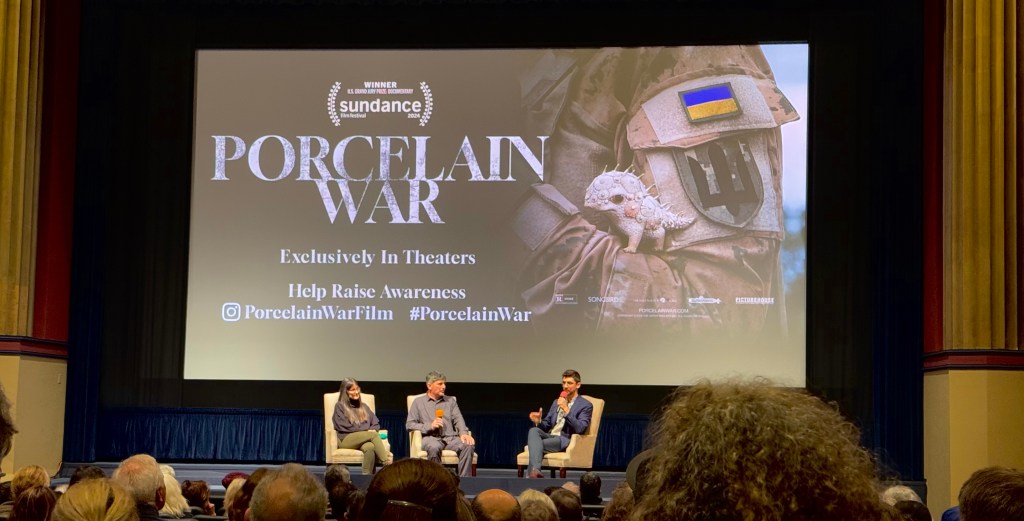
Porcelain War is a perfect anti-war film

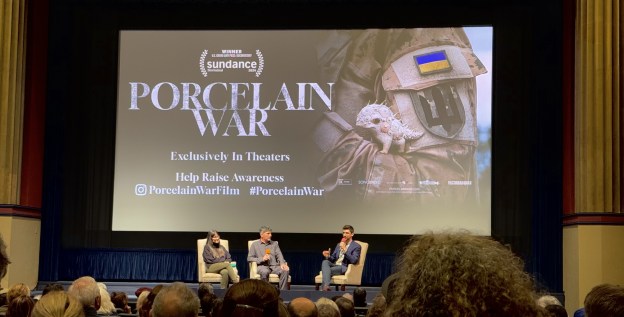
Porcelain War Filmmaker Slava Leontyev and producer Paula Dupre Pesmen were interviewed by the Ukrainian Deputy Consul General Yevgeniy Drobot at the Smith Rafael Film Center on February 4, 2025. (Photo by Dave Mackie)

Porcelain War is a terrible beauty of a documentary, an improbable and almost impossible achievement by a group of Ukrainian artists. Slava Leontyev, Anya Stasenko, and Andrey Stefanov stayed in the war zone around Kharkiv, armed only with their art, cameras, and, for the first time ever, guns. Ordinary extraordinary civilians electing to fight for their lives, culture, freedom, and democracy in a war waged against professional soldiers.

The filmmakers decided not to make a film that presents a balanced narrative of the horrors and successes of war. They wanted to show as much beauty, bravery, grace and decency as possible. There is no fog of war for the Ukrainian resistance. They fight in the most moral way, lamenting the brutal power of the weapons they use while showing compassion and empathy for Russian soldiers being sacrificed for Putin’s delusion of a restored Russian empire.

When I first saw it, I had the revelation that Ukraine’s war is the frontline of the worldwide struggle to save democracy. Many people already understood this, but the film hammered it home for me. That was before President Trump’s inauguration. Now, I see that the frontline has shifted to the United States and that Ukraine may become collateral damage in the worldwide anti-democratic surge.

Another troubling and sobering film is Democracy Noir about the Hungarian struggle against authoritarian forces. This film was shown at The Parkway in Oakland on inauguration day as a counterpoint to the ascension of the “broligarchs” in Washington, D.C.

Both films have useful lessons on resistance. Firstly, everyone who sees the authoritarian dangers must resist in their own way. In Ukraine, two porcelain artists and a painter became movie-makers. Other professionals, teachers, farmers, engineers, human resources specialists, and tech-savvy young people joined the army and put their skills to patriotic use.

In Hungary, three women- a journalist, a politician, and a nurse- led resistance work to counter Viktor Orbán’s corrupt, persistent, and largely successful campaign to undermine democracy. As many commentators have noted, Orban’s playbook is the model for Project 2025 and the barrage of executive orders Trump has signed in the first two weeks of his “reign.” Orbán took carefully crafted, methodical steps to chip away at Hungarian democratic institutions (the media, universities, arts organizations, and Non-Government Organizations) while maintaining popularity with a majority of citizens. His authoritarian project is over fifteen years strong. 

I have already seen Porcelain War twice this year, thanks to the generous and activist programming of the California Film Institute and the Smith Rafael Film Center. The film is on a limited theatrical release and has not secured a streaming arrangement so far. It has been Oscar-nominated for Best Documentary Feature. Don’t miss it if it is showing near you.

The soundtrack features the sweet and startlingly tart music of the Ukrainian band DhakaBrahka. The band is touring the United States in March and April and will play some concerts at the Freight and Salvage in Berkeley at the end of March. Described as being,

“At the crossroads of Ukrainian folklore and theater, their musical spectrum ranges from intimate to riotous, plumbing the depths of contemporary roots and rhythms.”

The film’s focus on people trying to live their best lives in a time of unrelenting war is inspiring and motivational. The scenes of beauty in nature and people are captivating. When the filmmakers were asked how people could help the cause, not once did they ask for money. Their goal was to raise awareness of how people are dealing with the tragedy in their country and raising money would be a crass and useless gesture. The film stands on its own merits.

The struggle for democracy is going on now in the United States and other countries. Very wealthy people are no longer rooting for democracy or for the common good. Towards the end of the film, Anya Stasenko says that she is lucky to have met so many brave people in the resistance and is amazed at how much good work they have accomplished together. Do we need to have wars to see this truth?

It would be easy to lose hope. Perhaps hope has finally risen to the level of strategy, to rework that Obama-era cliché? The lesson from these films is to do whatever you can; every little gesture of resistance is important. Support local arts organizations, especially for music, movies, theater, and visual arts. Stay informed by supporting independent and local media outlets while we still have some. Find community groups doing work for the common good and volunteer to help. Contact your elected representatives at the local and state levels to express your dissatisfaction with the outrageous power grabs underway. Take to the streets, like some Democrat leaders are finally doing. Speak out on behalf of the most vulnerable, demonized people and groups. Try to be as courageous, honorable and resourceful as Ukrainians.

Porcelain War

Dublinesque at the Back Room in Berkeley

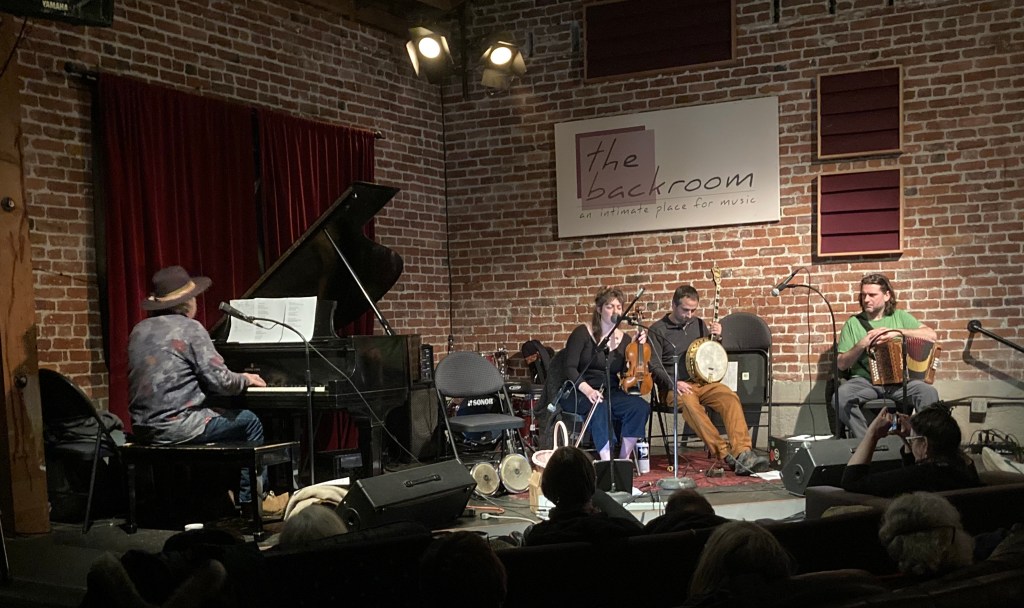
Eamonn Flynn brought his Dublinesque music hall event to the Back Room in Berkeley on February 1, St Brigid’s Day. I’ve seen this show a few times in recent years, and it’s always lively, entertaining, and ever-changing. Led by Flynn on piano and vocals, the ensemble includes Darcy Noonan from Oakland on fiddle, Hector Bragado from Balboa on banjo, and Felim Egan from Offaly on accordion.  

As the name suggests, the show focuses on Dublin songs and stories; every song has a story, and vice versa. The show is built around Flynn’s grooving, tuneful Dublin tribute album from 2022, Anywhere But Home. The city has its share of catchy, light-hearted songs: Molly Malone, Dublin Saunter (Dublin Can Be Heaven), Daffodil Mulligan, and Flynn’s own classic, Strollin’ (Baile Atha Cliath).

But there are darker songs, too. Sack ‘Em Ups is a rhythmic riff on the spooky subject of grave robbers in 19th-century Dublin. May Oblong is a tribute to one of Dublin’s most famous Red Light madames. Weela Weela Wayla, a well-known children’s song popularized by The Dubliners, is a gruesome tale wrapped in an infectious tune.  

Another grim story is told in Hunting the Wren, written by Ian Lynch of Lankum. Darcy Noonan set down her fiddle to bravely and boldly take the vocals on this dark, intense song. It commemorates The Wrens of the Curragh, a shameful episode in the history of Irish mistreatment of women. Willie O is a lovely old song that many singers have covered (I recommend Niamh Parson’s version.) Flynn paired it with a Dr John instrumental, Cajun Moon.

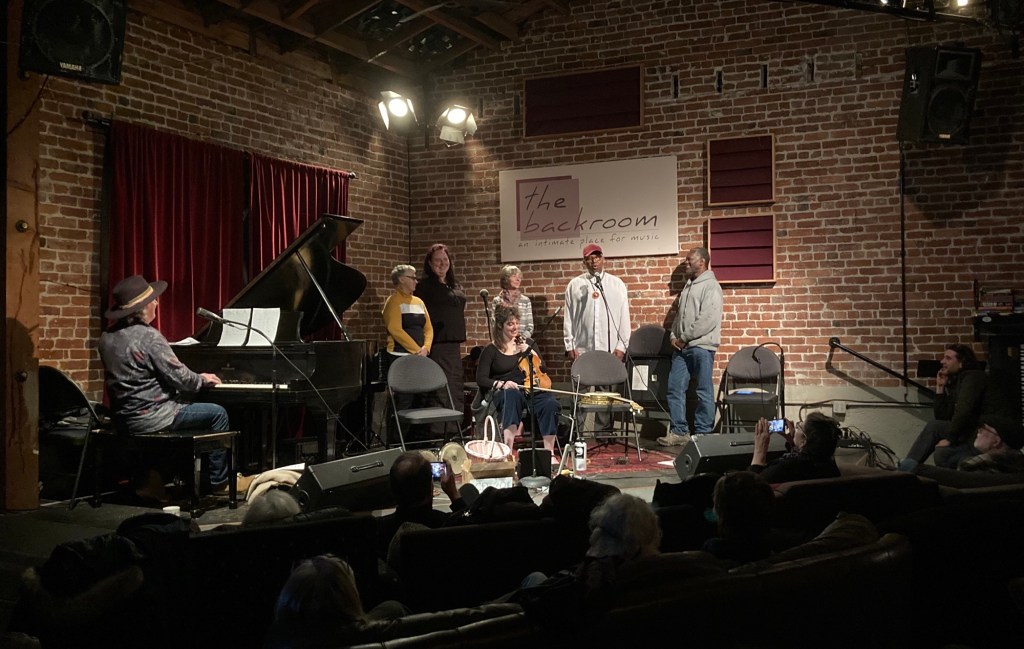
He is part of many wide-ranging musical groupings in the Bay Area. He and Egan play with the Black Brothers, who have some Bay Area shows in March. Check his website for upcoming performances in February and March. He has also been part of the Glide Memorial music program for a couple of years and brought some of the Glide Choir as guests for this show.  They provided the highlight of the evening with Dennis Hersey singing Danny Boy. It’s an overused piece, but Hersey sang with it with great heart and reverence.

Dennis Hersey of the Glide Memorial choir brought a deep interpretation of Danny Boy

St Brigid seems to have taken on a new agent in recent times. There were three other musical events in the East Bay on her feast day. The second Bank Holiday created by the Irish government to commemorate her occurs this Monday, February 5. Maybe someday, her life will be as widely celebrated as St Patrick’s. Flynn opened the evening by reading a poem attributed to Brigid known as The Lake of Beer. So, could there be a similar amount of sanctioned drinking on her holiday?

Christy Moore rides on the vibes at Vicar Street

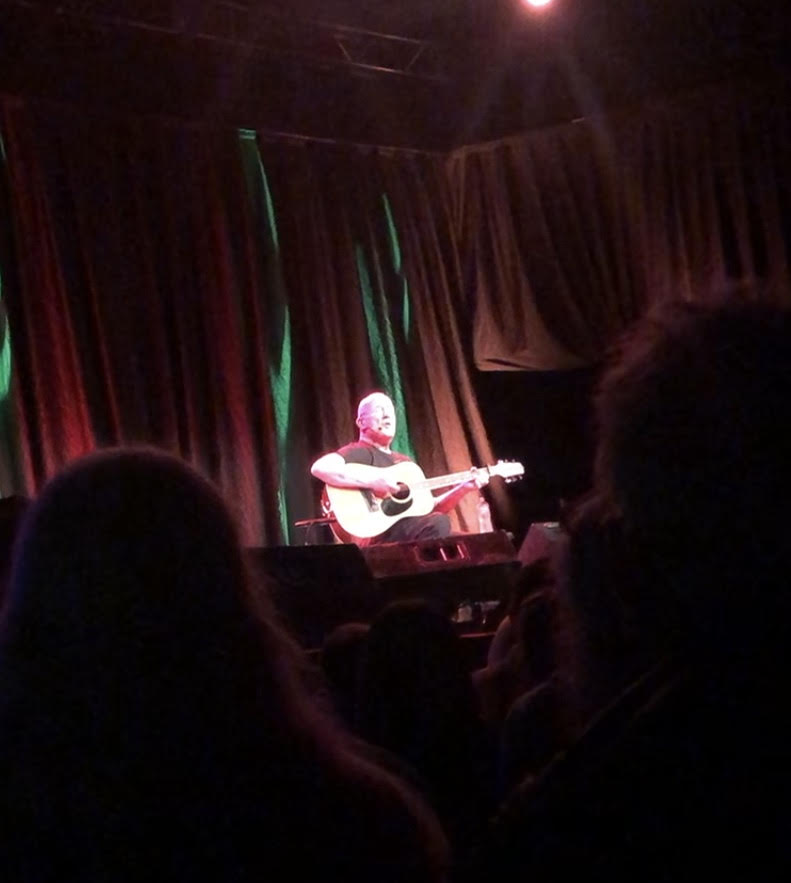
Christy in full swing at Vicar Street

If there is a better way to start the New Year than taking in a Christy Moore concert, I don’t know what that could be. He opened a series of performances on January 2, 2024, at Vicar Street in Dublin. The show reaffirmed that he is a force of nature, propelled by his deep dedication to singing and playing. He is still in powerful form and has many more performances lined up for this year.

At one time, he was a bit grumpy about people singing along at his concerts. At this stage, asking people not to sing the choruses to The City of Chicago, Ride On, or Viva La Quinta Brigada is a fool’s errand. This night, he embraced the communion of voices and the convivial vibes. The energies exchanged at his concerts make for spiritual and even transcendent experiences.

He has a rotating set list of favorites from the hundreds of songs in his repertoire. The Voyage, Lisdoonvarna (now with RTE flip-flops!), Welcome to The Cabaret, Barney Rush’s song Nancy Spain, and Joxer Goes to Stuttgart made welcome appearances. Moving versions of the Bobby Sands’ song Back Home in Derry and Black is the Colour made the list. His take-down of political gobbledygook, Lingo Politico, is another favorite. He is trying out a new song with the tart tagline: When it comes to social media, They’re afraid to use their names.

He interspersed some less performed songs like the one he wrote with the late Wally Page about going to Bob Dylan shows. Lyra, his tribute to the slain Northern Irish writer Lyra McKee, was well received. Barrowland, a song for his favorite Glasgow ballroom, another Page collaboration, popped into the setlist in response to a “noble call” from the floor. Another shout-out prompted the Shane McGowan masterpiece, A Pair of Brown Eyes. A quick chorus of I’ll Tell Me Ma could have been a memento mention for Sinead O’Connor, and if he had launched into “How can I protect you, in this Crazy World” for Christy Dignam we’d have been right there with him.

My evening highlight was his tender rendering of Beeswing, Richard Thompson’s novella of love, loss, and longing. An impressionist song filled with painterly lines: She was a rare thing, fine as a beeswing; Even a gypsy caravan was too much like settling down; and, You might be lord of half the world, You’ll not own me as well. The late Frank Harte proposed this song to Christy, a man who shared his forensic understanding of songs and singing. Moore has said, “It chills me to sing this, makes me happy and sad.”

Those contrasting emotions come in waves at Christy’s shows and never more so in the intimate space at Vicar Street. The modern Moore’s Melodies are memorable, feisty, and evocative songs that inspire and motivate. He has been the beating heart of contemporary Irish folk music since the 1960s. Indeed, seeing him sing in the Liberties brought back happy memories of the first time I saw him play a solo gig in St Catherine’s Church of Ireland up the street at The Liberties Festival in the early 1970s. If memory serves me right, a young Barry Moore before his Luka Bloom incarnation was on the bill that night.

I reviewed his remarkable book, One Voice, My Life in Song, in The Irish Herald, San Francisco, in December 2000 and said this about his status as a living legend:

“.. he is the best kind of legend -one who is still alive and picketing, and singing, writing, doing whatever is necessary to live a full and moral life.”

Today, his music continues to comfort the have-nots and confront the have-yachts.

New CD and DVD

A new CD and DVD called Christy Moore: The Early Years 1969 – 1981 was recently released. Christy’s website has a lovely introduction to the project with his son, Andy, interviewing him and singing along on the Dun Laoghaire pier, a “plein air” performance.