Category Archives: Irsh arts and culture

Another Honest Ulsterman Departs

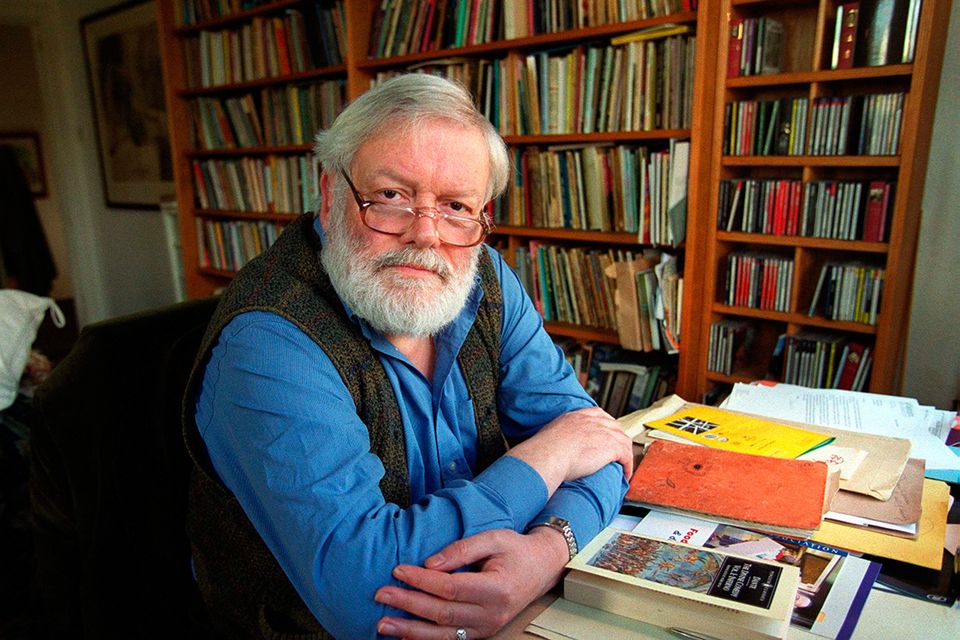
Michael Longley

The news of Michael Longley’s death today prompted me to search through the blog archives for my review of books by Longley and Ciaran Carson. Carson died in 2019, and Longley has now departed. Many tributes will be paid to Longley over the next few days and weeks. The Irish President, Michael D. Higgins, led the way in today’s Irish Times:

Michael worked to give space and actuality to the moral imperative that we must live together with forbearance, with understanding, with compassion and insight, and above all else, perhaps, with hope.

One of the first pieces I wrote for The Irish Herald in San Francisco in May 2000, at the instigation of Elgy Gillespie and Catherine Barry, was a review of two books of their poetry. This edited version appeared in the blog in August 2010, and I reproduce it here as a small tribute to Longley’s work and genius.

The Honest Ulstermen


A review of The Twelfth of Never by Ciaran Carson; Wake Forest University Press, 1998, and The Weather in Japan by Michael Longley, Cape Poetry, Jonathan Cape, 2000.


I first came to Carson’s poetry through his prose. Last Night’s Fun (North Point Press, 1996) is a masterly piece of work, arguably the finest book ever written about the mysteries of the music-making process. His new book of poetry, The Twelfth of Never, continues in that vein. He uses tune titles –notoriously misleading in the Irish tradition- for many poems. He poetically plagiarizes many old ballads, twisting and turning familiar lines into a darker tapestry such as this from The Rising of the Moon:

The pale moon was rising above the green mountain,
The red sun declining beneath the blue sea,
When I saw her again by yon clear crystal fountain,
Where poppies, not potatoes, grew in contraband.


Carson writes like a man possessed. The Twelfth of Never reads like it was written in one passionate, pellucid night when the words flowed freely, and his magpie mind couldn’t be stopped. And, as if living in the North was not strange enough, Carson’s forays into Japanese culture bring him to locations where he finds,
The labyrinth to which I hadn’t got the key.

Poetry is, at its best, an intellectual and emotional con game. The poet hopes to trick us into thinking anew about things or rethinking familiar things by sleight-of-word. Carson riffs, raps, trips, traps, rocks, and rolls our perceptions in his poetry.  In The Display Case, Carson seems to express some regret that his oeuvre is nearly all in English, not his native Irish language. But this is English writing that could only emerge from an Irish consciousness,
Where everything is metaphor and simile (Tib’s Eve).

Carson’s poems are odes to complexity, a dissection of that hairball of historic proportions, that nest of co-dependent hostilities that is Northern Ireland. And discussion of Northern Irish poetry is no less fraught with difficulty, a minefield sown with words.

Both Carson and Longley are distinctly Northern Irish. Longley describes being there as living in three places at once: one partly Irish, one partly English and one that’s “…also its own awkward self.”  Each covers the touchstones of Northern identity and the struggle of people to lead normal lives in the mayhem, including their efforts to play an artist’s role in a society given more to ideology than to introspection.

Both are famous as the artists that stayed home, laboring in the bloody northern field. They served long stints with the Arts Council of Northern Ireland before retiring in recent years to focus on their writing. As John Hume has noted (Arguing at the Crossroads, 1998), Northern artists were mainly responsible for keeping the flame of diversity and multi-culturalism alive during the years of strife and political polarization.

In All of These People, Longley ruminates:

Who was it who suggested that the opposite of war
Is not so much peace as civilisation? He knew
Our assassinated Catholic greengrocer who died
At Christmas in the arms of our Methodist minister.


The North, despite George Mitchel’s valiant efforts to impose some American pragmatism, remains an immensely complex place where words can and do explode –just think of the recent haggling over “decommissioning.” As Fintan O’Toole noted in the New Yorker (The Meanings of Union, April 27, 1998), crafting agreements in the North will require a poet’s skill, not a pragmatist’s words.

The ancient words of the Persian poet Rumi seem particularly pertinent to the current impasse in the North of Ireland.

Out beyond ideas of
Right doing and wrong doing
There is a field.
I’ll meet you there.


And if the Catholic and Protestant diehards ever make it out to that field, they’ll find Michael Longley and Ciaran Carson waiting to have words with them. High kudos to them for these collections. I can think of no two better Irish people to lead the charge of the write brigade across the field of new Irish dreams.
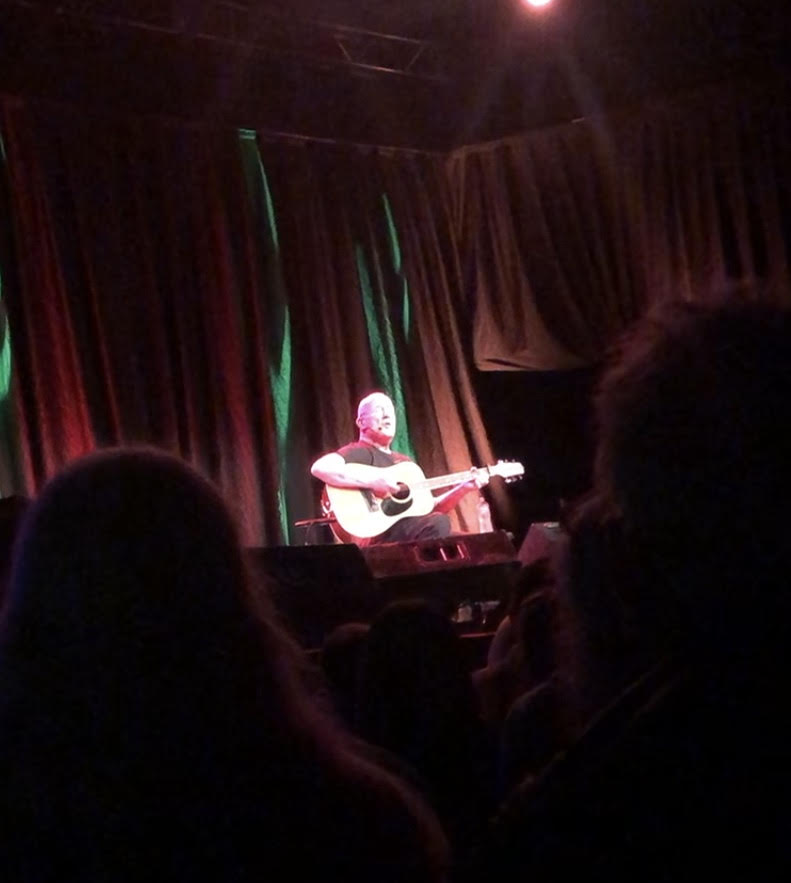
Christy Moore rides on the vibes at Vicar Street

Christy in full swing at Vicar Street

If there is a better way to start the New Year than taking in a Christy Moore concert, I don’t know what that could be. He opened a series of performances on January 2, 2024, at Vicar Street in Dublin. The show reaffirmed that he is a force of nature, propelled by his deep dedication to singing and playing. He is still in powerful form and has many more performances lined up for this year.

At one time, he was a bit grumpy about people singing along at his concerts. At this stage, asking people not to sing the choruses to The City of Chicago, Ride On, or Viva La Quinta Brigada is a fool’s errand. This night, he embraced the communion of voices and the convivial vibes. The energies exchanged at his concerts make for spiritual and even transcendent experiences.

He has a rotating set list of favorites from the hundreds of songs in his repertoire. The Voyage, Lisdoonvarna (now with RTE flip-flops!), Welcome to The Cabaret, Barney Rush’s song Nancy Spain, and Joxer Goes to Stuttgart made welcome appearances. Moving versions of the Bobby Sands’ song Back Home in Derry and Black is the Colour made the list. His take-down of political gobbledygook, Lingo Politico, is another favorite. He is trying out a new song with the tart tagline: When it comes to social media, They’re afraid to use their names.

He interspersed some less performed songs like the one he wrote with the late Wally Page about going to Bob Dylan shows. Lyra, his tribute to the slain Northern Irish writer Lyra McKee, was well received. Barrowland, a song for his favorite Glasgow ballroom, another Page collaboration, popped into the setlist in response to a “noble call” from the floor. Another shout-out prompted the Shane McGowan masterpiece, A Pair of Brown Eyes. A quick chorus of I’ll Tell Me Ma could have been a memento mention for Sinead O’Connor, and if he had launched into “How can I protect you, in this Crazy World” for Christy Dignam we’d have been right there with him.

My evening highlight was his tender rendering of Beeswing, Richard Thompson’s novella of love, loss, and longing. An impressionist song filled with painterly lines: She was a rare thing, fine as a beeswing; Even a gypsy caravan was too much like settling down; and, You might be lord of half the world, You’ll not own me as well. The late Frank Harte proposed this song to Christy, a man who shared his forensic understanding of songs and singing. Moore has said, “It chills me to sing this, makes me happy and sad.”

Those contrasting emotions come in waves at Christy’s shows and never more so in the intimate space at Vicar Street. The modern Moore’s Melodies are memorable, feisty, and evocative songs that inspire and motivate. He has been the beating heart of contemporary Irish folk music since the 1960s. Indeed, seeing him sing in the Liberties brought back happy memories of the first time I saw him play a solo gig in St Catherine’s Church of Ireland up the street at The Liberties Festival in the early 1970s. If memory serves me right, a young Barry Moore before his Luka Bloom incarnation was on the bill that night.

I reviewed his remarkable book, One Voice, My Life in Song, in The Irish Herald, San Francisco, in December 2000 and said this about his status as a living legend:

“.. he is the best kind of legend -one who is still alive and picketing, and singing, writing, doing whatever is necessary to live a full and moral life.”

Today, his music continues to comfort the have-nots and confront the have-yachts.

New CD and DVD

A new CD and DVD called Christy Moore: The Early Years 1969 – 1981 was recently released. Christy’s website has a lovely introduction to the project with his son, Andy, interviewing him and singing along on the Dun Laoghaire pier, a “plein air” performance.

Concertina Addendum

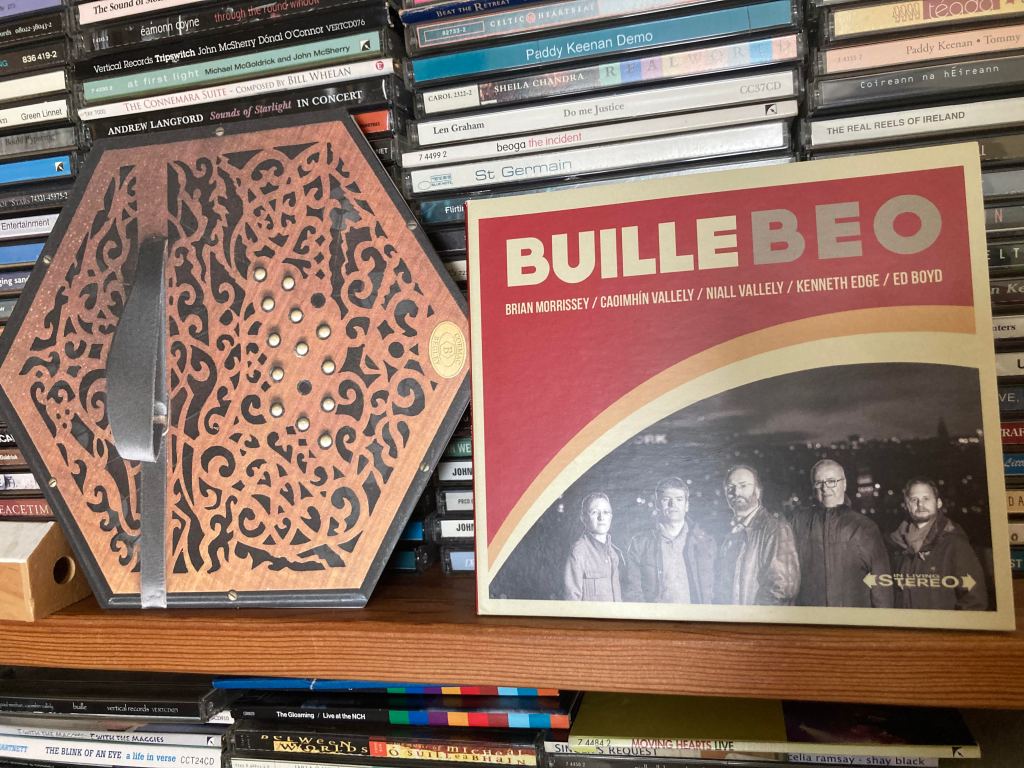
My post on Cormac Begley’s Vicar Street concert was out in the web world before I got a copy of his album, B. It arrived this week, and it’s a thing of beauty. The playing, the music, the design, and the dedication to delivering a concertina concept album. That’s the beauty on the left of the photograph.

I also recently received a “hard copy” of another album I recommended in that post, Niall Vallely’s Buille Beo. It, too, is an exceptional musical achievement, a live album recorded in Ballyvourney, Co Cork. Vallely is partnered with his brother Caoimhin on piano, Ed Boyd on guitar, Brian Morrissey on percussion, and Kenneth Edge playing some gorgeous soprano saxophone. Almost all the tantalizing tunes are composed by Niall and Caoimhin. The one that isn’t, In A Silent Way, is a Joe Zawinul composition immortalized by Miles Davis in an album of the same name. The version here is simply delightful, paired with an Indian-influenced tune written by Niall Vallely.

From Hidden Ground to Common Ground: More shared notes from Martin Hayes

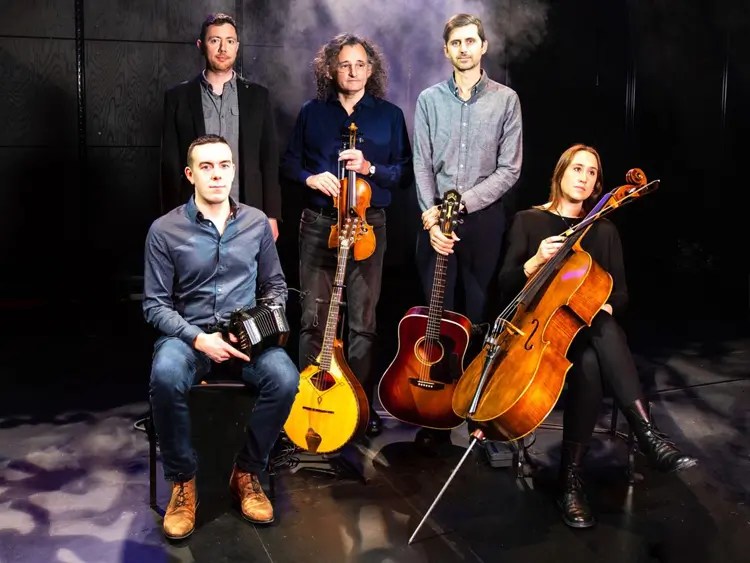
New music from Martin Hayes is always worth the wait. He is primarily a live performer but his recordings are unique, accomplished, and accessible. Peggy’s Dream is a graceful and adventurous album, building afresh on his other ensembles: The Gloaming, The Blue Room Quartet, Brooklyn Rider, and his long, profound partnership with the late Dennis Cahill. The album is dedicated to and inspired by Cahill and Hayes’ mother, Peggy.

Hayes brings a high degree of artistic, intellectual, and cultural credibility to Irish music, universally defined. He takes traditional music to the most prestigious arenas where it meets many other music genres as an equal and a willing partner. He has expanded and enriched Ireland’s cultural capital as a musician himself and as a facilitator of imaginative combinations. His partners on this new album are luminaries in their own right, selected for their musicianship and mutuality.

Cellist Kate Ellis is a prolific performer and musical leader. She is the artistic director of Ireland’s leading contemporary music group, Crash Ensemble. Her folk and traditional interests are well established, having played and recorded with Iarla Ó Lionáird, Gavin Friday, and Karan Casey. Guitarist Kyle Sanna has worked with Seamus Egan and Dana Lyn. Cormac McCarthy is a pianist, composer, arranger, and conductor from Cork. He is primarily a jazz and contemporary music artist with an album/band called Cottage Evolution. Brian Donnellan is the most mainstream traditional member of the group playing bouzouki, concertina and harmonium. Like Hayes, he is from an East Clare family and is a member of the legendary Tulla Céilí Band.

I have long thought that there is a case for the cello in the Irish tradition. The seminal Hidden Ground recording in 1980 from Paddy Glackin and the late Jolyon Jackson was a major influence on my thinking in this respect. I described it previously as the most artful deconstruction of Irish traditional music up to that point. Jackson played cello and a multitude of other instruments on the album, and his playing was also featured on The Chieftains Boil the Breakfast Early the previous year. More recently, Iarla Ó Lionáird’s thrilling and brilliant 2011 album, Foxlight, had two cello players, a viola, and Caoimhín Ó Raghallaigh! It sets a new bar for the integration of cello into traditional arrangements. It could well be an inspiration for Peggy’s Dream and this grouping. The hidden ground is now part of the commons.

The cello brings other dimensions and flow to the slower, more contemplative tunes. The Boyne Water opens with a jaunty melody from the fiddle and piano, then darkens with the cello’s arrival and a set of low, deep chords on the piano. Cá Bhfuil An Solas is a Peadar Ó Riada composition first recorded on the Triúr Arís (Three Again) album. The piano lays down a lively backing. Garrett Barry’s Jig has a moody, dissonant start with somber cello and harmonium throughout. It’s a mesmerizing piece with a perfect tonal balance of low and high. The Glen of Aherlow was written by Tipperary fiddler the late Seán Ryan, a prolific composer. Here it gets the “high lonesome” treatment from Hayes with a tight bit of ensemble playing, Sanna channeling Dennis Cahill on guitar. The piano and cello colorations are delightful. Aisling Gheal is a “goltrai” (an old Irish term for a lament) classic where the fiddle gets pride of place with empathetic piano.

The title track, Peggy’s Dream, was sourced by Steve Cooney from the Goodman Collection, like the Fainne Geal An Lae track on Foxlight. Plucked strings (is it piano or cello?) give a percussive base to the tune that is picked up by the concertina and fiddle. Like a few other tracks, this has a gentle, fade-out ending, perhaps dictated by the limitations of making a record. Live performances of these tunes may be very different.

The more up-tempo tracks contain the bones of Hayes’ trademark long sets. Toss The Feathers/The Magerabaun Reel opens with fiddle and guitar before McCarthy embarks on a jazzy piano section with shades of The Gloaming and Thomas Bartlett. Hayes soars to a big flourishing finish spurred on by the company. Johnny Cope, an old hornpipe I first heard on a Planxty album, is paired with the vivacious Hughie Travers’ Reel. The Longford Tinker has the rhythm of a joyful train journey. 

Hayes worked with McCarthy and Donnellan on a gorgeous EP recording, Live at the NCH 2020. Like any creative person, Hayes does not like to repeat himself. Even with tunes he’s played hundreds of times, he is always looking for another angle, a deeper emotional realm to explore. In his musical memoir, Shared Notes, Hayes describes it like this:

I must go to the space that I want others to enter, go as deep as possible and trust that the invitation is powerful enough for others to come along.

Some of Hayes’ favorite melodies get beautifully reconsidered on this album: Lucy Farr’s Barndance and, one of my all-time favorites, The Wind Swept Hill of Tulla.

Hayes is a vivid expression of the history of Irish music, a procession of musicians, composers, and listeners that stretches back many hundreds of years. His playing was so rooted in the best of the past that, in his early years, older musicians called him a ghost. Martin Hayes’ ensembles seem to be almost covenants. They are a set of intentional relationships intended to advance the tradition and enhance the Irish musical legacy. The Common Ground Ensemble enriches the musical identity of high-level players like Ellis, Sanna, McCarthy, and Donnellan. This is a beautiful recording brimming with inventiveness, intelligence, and integrity.

Sources, Resources, and links to the artists:

The next opportunity to see Hayes perform with some of his many musical partners will be August 23-27, 2023, at the West Cork Music venue in Bantry.

https://www.westcorkmusic.ie/masters-of-tradition/

The Ensemble has a tour of Ireland and England in the works for later this year. Some details here:

The Common Ground Ensemble in full flow playing at the New York Irish Arts Center in 2022. Recording by Bruce Egar.

For some details on the many musical activities of Kate Ellis start here:

https://www.crashensemble.com/

Explore the music of Cormac McCarthy and Cottage Evolution here:

https://www.cormacmccarthymusic.com/

Kyle Sanna and Dana Lyn have a series of albums that showcase their environmental activism:

https://danalynkylesanna.bandcamp.com/album/the-coral-suite-ep

The little gem of an album with Hayes, Donnellan and McCarthy is available here:

https://martinhayesfiddle.bandcamp.com/album/live-at-the-nch-2020

And, finally, the complete seminal Hidden Ground album from Paddy Glackin and Jolyon Jackson can be heard here:

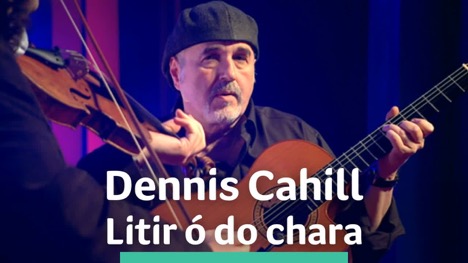
Dennis Cahill: Litir ó Do Chara

I know there are many musical and artistic events going on during the American Irish version of March Madness in and around St Patrick’s Day. But let me recommend one event that does not require you to leave the house: the documentary film Dennis Cahill: Litir ó Do Chara currently playing on the TG4 player. It is a poignant tribute to the late master guitarist drawn from the letter Martin Hayes addressed to his long-time musical soulmate.

Director Donal O’Conner, himself a fine fiddle player, chose to have other Irish musicians speak admiringly about the guitar player: concertina player, Cormac Begley; singers, Iarla O’Lionaird and Niamh Parsons; fiddlers, Liz Carroll and Caoimhin O’Raghallaigh; accordion player Jimmy Keane; and a posse of guitarists, Seamie O’Dowd, John Doyle and Steve Cooney.

Consequently, not much is heard from Cahill or his playing but his enduring influence is pervasive. The short film features some delightful performances but the guitarists take pride of place. Here’s their symbiotic playing of the O’Carolan melody Sí Bheag Sí Mhór.

And, if that was too beautiful and slow for you, here’s the trio with a gorgeous powerhouse performance of the Bearhaven Lasses & The Morning Dew that did not make it into the film. Thanks to Michael Black for bringing it to my attention with a Facebook post.

The Quiet Man of Irish Music has left the Stage, my own tribute to Dennis Cahill, was offered last year soon after his death. This old blog of mine owes its origin to my attraction to and curiosity about the musical journey of Martin Hayes and Dennis Cahill. The first posting back in 2008 was Hayes and Cahill: Recalibrating the Tradition. Enlightenment about playing the music was guaranteed whenever you talked to them. I described Cahill’s accompaniment as taking minimalism to new heights on this album:

His playing becomes a sub-sonic shadow to Hayes’ fiddle on Mulqueen’s. It’s an amazing musical symbiosis. In their collaboration, it often seems like Cahill has the map in his head but Hayes knows the roads and backroads and the negotiated journey is always worthwhile and wondrous.

The Journal of Music published a perceptive review of the film, Every Note To Be Magical. One combination graced by Hayes and Cahill, the Blue Room Quartet, does not get much of a mention in the film. Hayes has said elsewhere that many of the arrangements on The Blue Room album came from Cahill. Myles O’Reilly’s film captures the process of making that amazing album illustrating many subtle but essential contributions from Dennis Cahill.

The film is available now on the streaming channel of Irish-speaking television network, TG4. This link will work only if you have downloaded the free TG4 Player.

Songs of the Road by Vincey Keehan

Vincey Keehan was sidelined by the Covid lockdown but it gave him time to write some new songs and pull some old ones from the bottom drawer. Before he knew it, he had a fine album on his hands, Great Highway. Galwayman Keehan is a vital, long-time node in the San Francisco Bay Area music community. He gathered the village luminaries to produce this lively, lyrical collection of songs, a piece of high-level, homemade art honed over years of playing with like-minded working musicians.

My first impression of these songs with the traveling themes was that Mayo Troubadour, John Hoban, might have a hand in the work. And, sure enough, Hoban gets credited with inspiring Keehan years ago to begin writing songs that were personal and dealt with everyday life. Blended in with memories of childhood and life in Ireland it makes for a memorable mix. Keehan composed all the songs and does most of the singing with help from his son, Michael, and daughter Rosie. The liner notes include a number of beautiful historical family photos.

The album is filled with sturdy, tuneful songs. Any worthy singer-songwriter would be proud to have songs like Working the Streets, Rosmuc Hero, Going Down the Road, The Classic, Argentina or Georges Street.  Working the Streets has a measured pathos with Rosie on vocals. Eamonn Flynn on piano, Kyle Alden on guitar, and Dana Lyn on fiddle provide a lovely setting for a sad story. Going Down the Road is a fine country anthem with the pointed refrain,

You call me anytime you’re thinking about the road.

The Classic is a honky-tonk opener inspired by nights at the Classic Ballroom in Gort, Co Galway, Keehan’s home territory. It’s a sketch of his journey from the showbands to traditional music and later emigration to the U.S.  The band are firing on all cylinders: the ubiquitous pair of Flynn and Alden; Gas Men regulars Kenny Somerville and Cormac Gannon; and backing vocals from Michael Keehan and Susan Spurlock

Argentina was my favorite song on The Gas Men’s Clement Street album with the touching lines, Although we speak in Spanish now, in Gaelic we sing our songs. Here Mary Noonan takes the lead vocals.  It’s a lovely lean arrangement with Colie Moran on acoustic guitar and Paddy Egan on concertina. Another uncluttered song is the ballad, The Lovely Woodlands of Clare, a tribute to Keehan’s niece, who died tragically at a young age. 

Rosmuc Hero honors the boxer Sean Mannion. The song tells the poignant, painful portrait of a man’s rise, fall, and redemption. It has a layered lonesome sound with sax, guitar and harmonica. Make It Back is sung vigorously by Michael Keehan, giving Van Morrison a run for his money. Along with Morning, this is a new song developed in street sessions during the Covid lockdown. This song and Pride Comes Before the Fall are wonderfully embroidered by Bill Sparks saxophone playing.

Many of these songs will have longevity and be carried on down the highway by other singers. Kyle Alden shows the way with Georges Street on the album with a solo performance. He applies the style from his W. B. Yeats albums Songs From the Bee-Loud Glade (2011)and Down in the West, Volume I (2013). Yeats might relish lines like, 

My mother said my neck would break,

Staring at the Gateaux cakes.

Alden contributes some musical adornment on almost every track and co-produced the album with Keehan.

Another delightful ballad is I Got to Dance with the Rose of Tralee. Rosie Keehan’s other claim to fame was representing San Francisco at the Rose of Tralee Festival in 2014. She also gets her own song Rosie is Going to School, one of Keehan’s early songs. The Blackbird Set is a fine string adventure with the band showing their traditional chops on two mandolins, a fiddle, a concertina, and guitar.

Keehan has been singing trad and folk songs for many years. There are songwriting lessons to be learned from the old songs and Keehan has absorbed them well. He continues his journey down the Great Highway, making all the stops along the way. Like many of us, Keehan found the San Francisco Bay Area is just like the Hotel California: you can check out any time you want, but you can never leave.

The CD launch party has been rescheduled to October 7 at 7:00 pm at The Balboa Theater, 3630 Balboa Street, San Francisco.

Selected Blogiography

For more information on Keehan’s music and performances visit:

http://www.vkmusic.net/

The album is available from Bandcamp and will be on sale more generally after the album launch on October 6.

https://vinceykeehan.bandcamp.com/album/great-highway

The definitive Gas Men album, Clement Street, was released in 2008. My review is here:

https://theoldblognode.blogspot.com/2009/01/playing-in-street-with-gasmen.html

Keehan made a lovely album about 10 years ago, Nights in Shanaglish, with Paddy Egan and many of his cohort from this album. My review is here:

https://theoldblognode.blogspot.com/2013/04/nights-in-shanaglish.html

Paddy Egan -Pádraig Mac Aodhgáin has a splendid solo concertina album, Tobar Gan Tra.

https://www.tobargantra.com/

Kyle Alden’s Yeats album, Songs from the Bee-loud Glade, is reviewed here:

https://theoldblognode.blogspot.com/2011/11/songs-from-bee-loud-glade.html

For news and updates on the inspirational John Hoban:

http://www.johnhoban.net/

Sean Mannion, Rocky Rosmuc, is interviewed here:

Mick Moloney, another good ancestor passes

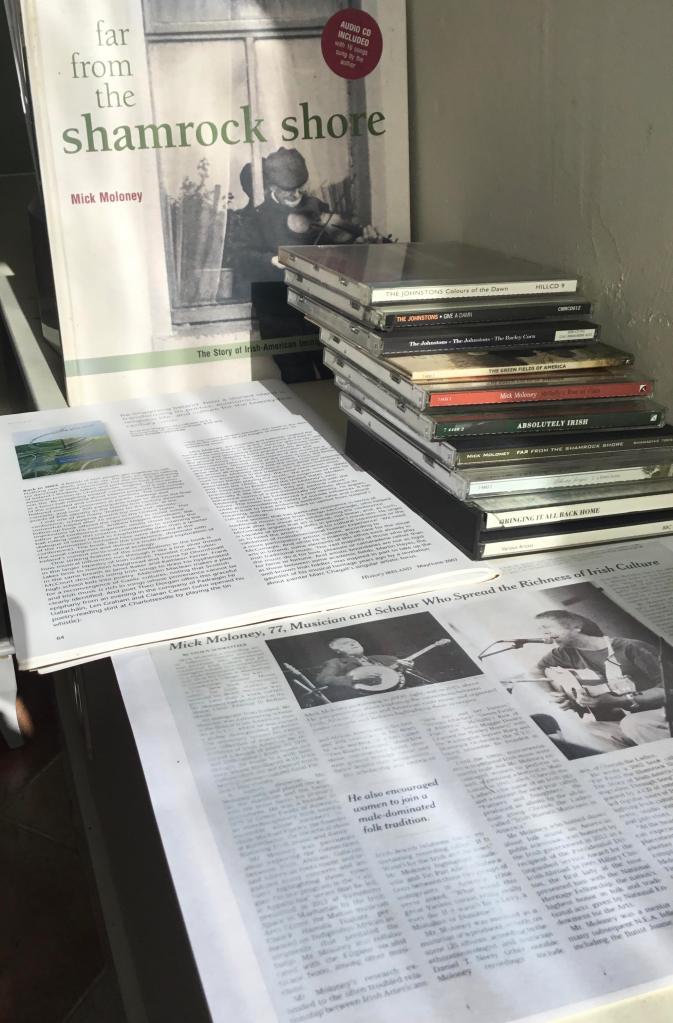
A selection of Mick Moloney’s albums and writing

Mick Moloney is a giant figure in the Irish music universe. His sudden passing last week at age 77 has left musicians and music lovers all over the world reeling with grief. Coming so quickly on the heels of other major departures, Dennis Cahill, Tony Mac Mahon, and Paddy Moloney, makes this a sad season of mortality. Each represents an enormous loss to the diverse rainforest of Irish music and Moloney is another huge tree whose fall echoes throughout the ecosystem. However, the roots he put down in Ireland and the United States, and the seeds he has sown in many other corners of the world will nourish new growth for years to come. Even his shade will be fertile.

Mick Moloney could be described as a universal unitarian since he did not recognize clear-cut musical borders between Irish, Irish American, folk, and other cultural traditions. The outpouring of eloquent, dignified, and heartfelt tributes on social media has been overwhelming. Many are from musicians who knew him, were mentored or taught by him, had their first performances engineered by him, or were touched by him at critical moments in their development. Many are well-known names, others less so. What is crystal clear, is that every encounter with him was enlightening and uplifting, sometimes life-changing, and often memorable.

He was a brilliantly accomplished musician but his modesty meant that he rarely hogged the limelight, preferring to praise and honor other musicians. He loved ensemble playing and the list of his collaborators is extensive. His style was composed and cool but he wanted always to be known as a banjo-driver.

I met him through his music, initially with The Johnstons whose Colours of the Dawn album was a mind-blowing experience that still has resonance fifty years later. It was one of an early series of ear-opening Irish music performances that stretched from Sean O’Riada, the Clancy Brothers, and The Dubliners to Planxty and Horslips. For many years, my go-to party piece song was The Old Man’s Tale (by Ian Campbell) appropriated from Mick’s rendition on that album. And, I can still sing a couple of verses of The Fields of Vietnam (by Ewan MacColl) from his 1973 solo album, We Have Met Together.

Then there is the song, Kilkelly, composed by Peter Jones from letters sent to his great, great grandfather by his father back in Ireland. I first heard this on the compilation album, Bringing It All Back Home in 1991, played by Moloney, Jimmy Keane and Robbie O’Connell. This poignant song became emotionally powerful for me in 1994 when my father died in Dublin and I did not get home in time to say a last goodbye.

He is an archetypal Good Ancestor who landed in a nurturing family in Limerick and spent summers with his grandparents in Sliabh Luachra, that mysterious space that borders Cork and Kerry whose music belongs to neither county. Heeding the biological imperative to bloom where you are planted, Moloney absorbed the cultural and musical riches around him. When he moved to Pennsylvania in 1973 to study ethnomusicology at the University of Pennsylvania, he sought out, acknowledged, and proclaimed some of the Irish musicians who had toiled in the U.S. for years, notably Ed Reavy, Mike Flanagan, Eugene O’Donnell, and Sean McGlynn.  He was determined to honor these living ancestors who kept the music alive in often inhospitable circumstances.   

Our paths crossed a few times, most memorably at Charlottesville, Virginia, in 2003 when a Who’s Who of Irish artistic, literary, musical, political, and cultural characters participated in the Reimagining Ireland Conference. Moloney was a compelling, lively, and witty talker and he was in his element at this extraordinary gathering. When he chaired the panel on Irish Music in Charlottesville (an occasion when there really were “good people on both sides” in that gracious city) he opened the session by commenting on the “almost frightening display of punctuality” he was witnessing at an Irish event.

I had some informal interviews with him when he played in the Bay Area. You always knew a little more about music, culture, or social history after a conversation with him. He oozed erudition. In 2016, he performed a program of song, dance, and poetry at the Freight in Berkeley for the centenary of the Irish Rebellion, a pivotal and cathartic moment in modern Irish history. In typical fashion, he was more keen to sing the praises of his fellow musicians that night: Billy McComiskey on button accordion, dance champion Niall O’Leary, and Athena Tergis on fiddle.

I was a very minor figure in his Irish music universe but nevertheless, he generously responded to my requests and messages. We remained in contact via email for many years and I was surprised to find how many messages I had received from Moloney, oftentimes from his adopted home in Bangkok.

Moloney was an unabashed liberal with a life-long passion for social justice. He was woke before it was popular or profitable inspiring Joanie Madden to form the all-women group Cherish The Ladies, still going strong after almost 40 years. He was, as the Irish Times obituary described him, a renaissance man with many strings to his bow. He also received a half-page obituary in The New York Times. His capacity for positive and progressive work in and around the music was immense and he was playing right up to his final days.

In the follow-up publication from the Reimagining Ireland conference, Moloney contributed an insightful and incisive essay on Irish music. He was fundamentally optimistic about its future. The music has preserved a core identity, he argued, while accommodating a variety of outside influences. It has shown itself to have enduring aesthetic value and cultural meaning and thus may be hard to uproot from Ireland’s cultural ecology. Moloney deserves a big share of the credit for that rootedness.

Additional Resources

By Memory Inspired, Mick Moloney Songbook is a riveting series created during the Covid era and available on YouTube. Each episode features a song or tune around which Moloney weaves a tapestry of social, cultural, and historical context. Start with this one but take the time to view them all: you will be enriched and uplifted.

The book on the Charlottesville Conference is:

Re-Imagining Ireland: How a storied island is transforming its politics, economics, religious life, and culture for the twenty-first century. Book and DVD, Edited by Andrew Higgins Wyndham, University of Virginia Press, Virginia & London, 2006. 288 pages.

https://www.upress.virginia.edu/title/2357

My review of The Johnstons Reunion concert in 2011 can be read here:

https://theoldblognode.blogspot.com/2011/07/johnstons-reunion-concert.html

And I recently found an excellent recording of highlights from that concert posted on YouTube. It’s nicely organized into segments, so you can easily find your favorite Johnstons song.

https://www.youtube.com/watch?v=GMNqH8MLVAw

The Quiet Man of Irish music has left the stage

Portrait by Nutan Jaques Piraprez
(from his Facebook post at Nutan Jacques Piraprez’s )

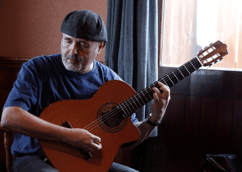
Dennis Cahill died this week at his home in Chicago. His low-key style, superb guitar playing and authoritative musical presence expanded and enriched Irish music. His relationship with Martin Hayes is one of the most enduring and inspiring musical achievements of the past 30 years, one that extended into two other influential groups, The Gloaming and The Martin Hayes Quartet. Accompaniment always seemed like a pale descriptor for his beautiful work.

Dennis Cahill was the quiet man in the Hayes-Cahill partnership. But his silence was studied, voluminous and eloquent. In other settings like workshops or classes, he had plenty to say, much of it pointed, precise and passionate. And, he had a good ear for humor and jokes.

He embodied the traditional value of modesty which takes a particular variation in Irish culture. He never flaunted his universal musical wisdom and experience. It was this very global reach which drew Hayes to him, first as a friend, and later as a harmonic partner. In his recent biography, Hayes describes their second round of playing together on tour in Norway. (There was some serendipity around them becoming a pair.) Instead of becoming a traditional guitarist in a generic sense, he encouraged him, “…to look at these tunes in the way one might imagine a Bach partita or a Beatles song.” The harmonic and chordal side of traditional music is not so clearly defined and Hayes felt that together they could find some unexplored territory.

I had the great privilege, with a cohort of other Bay Area admirers, of seeing their partnership grow and flower over almost thirty years. I saw them play many times in San Francisco and Berkeley before I ever tried to write about their music. One element of their performances I always enjoyed watching was their on-stage communication. Traditional music is full turns, repetitions, not-quite-repetitions, and shifts in cyclical patterns. Rabbit holes of a sort. Someone has to call the changes even in a duo. Early on, Hayes’ signals were broadly visible: the headshake, the direct stare or the half-turn. Over time, though, this communication became subtle, almost imperceptible. Hayes says in his Facebook tribute to Cahill: “There were so many times on stage when you were simply able to read my mind…”

One of my favorite passages in Martin Hayes’ book describes their routine when they drove to gigs, Martin behind the wheel and Dennis on the maps:

We were both OK with long stretches of silence where an hour or two would pass by without either of us saying a word.

This was easy to imagine since in any long-term relationship there is a plateau where people are content to say only what needs saying.

One reality that is painfully illustrated in Martin Hayes’ biography is how precarious a pursuit of artistic integrity can be. There are many years spent playing to small audiences, in cramped venues with relentless travelling and very limited income. There is no guarantee of a safe and successful passage from the noisy stage in the cavernous Fort Mason or the tent in Sebastopol or the old Freight and Salvage in Berkeley.

The last time I saw Cahill play live was in 2018 when Hayes and his Blue Room Quartet were featured at the Freight. I noted that Hayes was, “Doubling down fruitfully on his long association with guitarist Dennis Cahill, Hayes has now created a Quartet..” The full review is found here. One of the duos most memorable shows at the Freight was 10 years ago when sound engineer Tesser Call created a sonic wonder for the enraptured audience.

Interviews with Hayes and Cahill were always enlightening, a colloquium in the finer points of playing music and the creative process. One of my most memorable interviews with the pair also took place at the Freight in 2008. When I asked about how they prepare for concerts, Hayes explained their shows this way:

Our live performance is sort of its own thing. Whatever happens, happens. They go a certain way. The live show doesn’t vary hugely from night to night, it kind of gradually changes. No two nights are the same –I might like it to be- but some tune will fly and another one won’t. There’s not much you can do about that. You have to feel it out every time.”

Dennis weighed in with this observation:

“And you have to do it that way for two reasons. One, there’s only two of us up there, so you’re very exposed. And if you don’t let it flow, and get in the habit of doing that, you run the risk of becoming your own tribute band –sounding like somebody doing a version of you.”

You could tell from his expression that this was the worst fate he could envisage for them.

Then, he added this acute analogy:

“You have to have a framework and you have to keep it in your head. I think of it as being like one of those chairs you need to assemble –you can put the screws in place but don’t tighten them. Because if you do, it may not fit and you’ll end up with one leg hanging too high in the air. Each piece, each performance has to work like that.”

With exquisite communication and profound intuition, Hayes and Cahill assembled many magical musical chairs over their years together. Hayes says Cahill was one of a kind, a very special blend of talent, humility, grace and good humor. He will be deeply missed by the music, the musicians, the audiences, his family and friends.

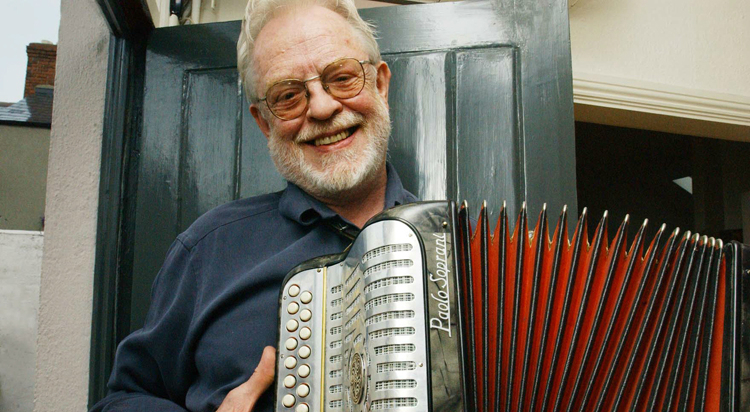
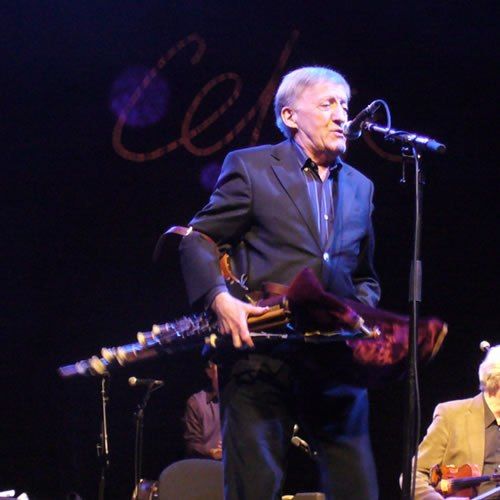
Mac Mahon and Moloney: Two Irish music titans leave the scene

Two Irish music giants died last month. Tony Mac Mahon was a fervent guardian of the music traditions, an accordion maestro, a folklorist, and communicator par excellence. He lovingly championed the cultural riches of Irish music for his fellow citizens and shared that huge heritage with the world. Paddy Moloney was a genius and a musical entrepreneur, taking the ensemble structure initiated by Seán Ó Riada with Ceoltóirí Chualann to glorious and enduring heights with The Chieftains. With that ebullient band, he passionately presented the cornucopia of Irish music to the world, taking the music out of the pubs and into concert halls.

Both men leave behind immense cultural legacies, preserving and renewing melodic masterpieces and rare tunes, and seeding the revival of Irish traditional music. Mac Mahon was a collector, curator, broadcaster and often provocative commentator. Moloney was a brilliant band leader, a fine composer, and a generous musical partner.

Moloney was a master of the notoriously temperamental uilleann pipes, a skill characterized by the late Mícheál Ó Súilleabháin as akin to wrestling with an octopus. It’s fair to say he popularized octopus wrestling in many surprising corners of the world. Mac Mahon had a famously ambivalent relationship with the accordion and occasionally wished that he could have played the pipes, a more authentic traditional instrument, in his view.

Paddy Moloney’s life was celebrated recently on the RTE radio Rolling Wave show. One of his early achievements (sometimes forgotten with all his subsequent accomplished) was as CEO and producer for Claddagh Records. These included classic records like The Liffey Banks by Tommy Potts and The Star Above the Garter by Dennis Murphy and Julia Clifford. The role Moloney played in expanding Claddagh Records and the work of reinventing the label are described by Siobhán Long in a recent piece in the Irish Times. The Chieftains played regularly in the Bay Area and they were the last live concert I attended before the Covid lockdown in February 2020.

Moloney was often described as an ambassador for Irish music and culture but Mac Mahon had the equally vital role as emissary from the recent and not-so-recent past. He spoke for the vernacular Irish artists who kept the music alive during the worst of times, before and after the state achieved a measure of independence.

The Rolling Wave (another tune Mac Mahon favored) radio show also memorialized his contributions with praise and recollections from Liam O’Connor of the Irish Traditional Music Archive, Noel Hill, a musical partner and soul-mate, and Caoimhín Ó Raghallaigh who persuaded Tony to record Farewell to Music, his last album released on Raelach Records in 2016.

Mac Mahon, like Martin Hayes and Iarla Ó Lionáird, served as messengers from our traditional musical history, loyal spokesmen for the ancestors. His message was directed at Ireland and the Irish, his plea echoing Breandán Breathnach, that we love and respect the music because it is our own. Mac Mahon’s lifework may be viewed as a Tabharthas, an offering to the artists who preceded him and his peers. According to Manchán Magan’s fascinating book, Thirty-Two Words for Field, the term also means sacrifice. And there is little doubt that Mac Mahon sacrificed some parts of his life for his work. One of his favorite pieces was the lament The Wounded Huzzar and the title may have resonated with his experience.

O’Connor describes Mac Mahon as a force of nature, a sweet and forceful player who did not value technique but had tons of it. Noel Hill, who played with Tony on the classic recording, I gCnoc na Graí/Knocknagree, noted that their way of thinking about the music was very much aligned. They shared a sadness about what had gone before and the loss of the Irish language. And it could be heard in his playing. Caoimhin O’Raghalaigh said that Mac Mahon felt the real music is in the slow airs. He loved the sean-nós singers. His playing was like brushstrokes bringing out the dramatic depths and spaces in the tunes.

I never had the opportunity to meet Moloney in person, other than the time a few years back I saw him in his favorite Indian restaurant in Glasthule but chose not to intrude on him. I did have a phone interview with him once for a San Francisco Irish Herald article during one of the Chieftain’s almost annual U.S. tours. His “people” offered me ten minutes but Paddy was happy to talk for longer as he bemoaned the lack of proper tea in his Denver hotel room. He was naturally gracious and generous.

I had more time and interactions with Mac Mahon and count myself fortunate to have crossed paths with him as an aspiring music writer. I saw him play two extraordinary concerts with the Kronos Quartet at Stanford University in 2002 and at a Napa winery in 2003. David Harrington of the Kronos Quartet told me, “…when I hear something as remarkable and rare as Tony, I believe it. His playing has an extraordinary singing quality in the way he molds and shapes every note.” He was gracious and eloquent, eager to share his insights about the rich store of traditional music. He had an edge to him but his curmudgeon persona could be brilliant and funny.

He played a number of other concerts at smaller Bay Area venues during his 2002 visit. One was at the Resource Center for Non-Violence in Santa Cruz, hosted by Bob Breheny of the Celtic Music Society of Monterey and recorded by Pete Haworth of Molly’s Revenge fame. Tony was in fine form and partnered up with Japanese guitarist Junji Shirota, who has a refined ear for Irish traditional music. It was a magical evening and Tony responded wholeheartedly to the energy generated by an audience of aficionados who were very familiar with his oeuvre.

I was in attendance and later received the recording from Haworth. I treasure it and listen back frequently. And since it is better to listen to Mac Mahon play than read about him, here’s a rare live recording from that house concert in Santa Cruz. It’s the mournful air Amhrán na Leabhar

One track only whets the appetite so here’s another from the superb album, Mac Mahon from Clare from 2000. This old march, The Haughs of Cromdale, was recorded at Mac Mahon’s house in the Liberties with Barney McKenna, John Sheehan and Liam Ó Maonlaí. This is one of the tracks flagged by Paul O’Connor in his mind-blowing survey of Irish music available on Soundcloud, 200 tracks to mess with your idea of trad

Mac Mahon and Moloney had the benefit of growing up marinating in complete universes of traditional Irish culture, one rural and one urban, with music at the heart of it. Both men were strongly committed to uncovering and displaying the shapeliness of the harp tunes, the song-airs, and the music of great, largely unrecorded, older players. They worked at mastering the technical elements of their art and willingly absorbed the codes, customs, and wisdom embedded in that life. That’s what made them such credible messengers and advocates for the tradition. They will live long in our hearts and ears.

Richmond, California
U.S.A.