Tag Archives: Tony Mac Mahon

Sad Farewells to Eithne Vallely, Bob Breheny, and Dolly Parton

Eithne Vallely

The unexpected, tragic death of Eithne Vallely last week is a huge blow to Irish traditional music in Ireland and the wider world. As matriarch of the legendary Vallely clan, she is the epitome of “the good ancestor.” The founder of the Armagh Pipers Club in 1966, with her husband Brian, she was an inspirational teacher of a wide range of traditional instruments. Eithne grew up steeped in Donegal music and Irish-speaking culture. Her mother, grandmother and grandfather were fiddle players, and she began playing at age nine.

Three of her children are distinguished musicians and part of the traditional music avant-garde: Niall is a concertina player who formed the Cork-based band Nomos and later recorded two albums under the name, Buille, with his brother Caoimhin on piano; Caoimhin co-founded the group North Cregg and is also a fiddle player; Cillian is a piper and has been the calm center of the high-powered group Lunasa since 1996.

Eithne’s husband, Brian, is a teacher, organizer, and pipes and flute player. In addition, he is a highly-regarded painter who focused on Irish music and musicians in his work. His portraits featured in many publications, including the Companion Guide to Irish Music edited by his first cousin, Fintan Vallely.

The Irish Times report on her death noted that the Armagh Pipers Club said it was with “great sorrow” that they shared news of her death, extending “heartfelt sympathy” to her family. “Eithne brought music into the lives of children for six decades,” the club said. “Her enormous contribution to Irish traditional music was recognised nationally with many awards and honours.” Thousands of musicians got their start at the Armagh Pipers Club, and many are still active performers.

Bob Breheny

And, in the SF Bay Area, we mourn the passing of Bob Breheny, the quiet dynamo of the Celtic Music scene in the South Bay for over forty years. I had several fruitful and funny encounters with him over the years at concerts featuring Tony Mac Mahon, Martin Hayes and Dennis Cahill, Molly’s Revenge, among others.

Michael Black knew him well and wrote this elegant, eloquent tribute for the Celtic Society of the Monterey Bay. I particularly liked this summary:

He was incredibly well read, quietly observant, and full of unexpected humor. I will admit it took me a while to get used to his puns, but they became part of who he was, and part of what made him unmistakably Bob.

Bob was well known for his quirky ways as a host and his very wry (but never awry) sense of humor. He liked nothing more than drawing you into a bout of high-level banter where his erudition would flash and frolic.

I pulled up a couple of his old email messages, which illustrate his mischievousness. From 2011,

Cheers Tom.

Thanks for the bellow below.

Bugger. Wish I did espy in the sky your review of Brendan & Caoimhin ere churning out the cheesy newsletter. Had I done so, I’d filched the whole thing. Of course, permission would be good too. Maybe I’ll figure out how to include in October update or at least refer folks to same. Saxophone!

There’s also a bit on your blog about Moya Brennan in T with the Maggies, arriving anon for only No. California appearance in Santa Cruz. Her manager and better half, Tim Jarvis, will also be along, so I hope we get a good showing or it’ll be my guts for garters.

Imbibed your riff on ‘The Guard.’ Ever see Brendan Gleeson flick ‘I Went Down?’ Mighty stuff. Thought I read somewhere that he was directing film of what I’d thought to be unfilmable, Flann O’Brien’s ‘At Swim-Two-Birds.’ Anything, other than 12 inches, afoot there? 

your palindrome pal, -BoB

And this exchange from 2008:

Hey Bob: Thanks for the blog menchkin (which, as you know, is an old Gaelic word for a little mention) in the latest newsletter. You’ve got some great stuff coming up. I saw the Molly’s last night rattling the pews in an Episcopal church in Castro Valley….. Can I use “blogtrotting” if I give you credit? As you said once to me, I wish I’d thought of that…. -Tom

Mazel tov, Tom.

Use what you wish sans credit, it’s not as if I’d be calling you and come after your blog with a bludgeon.

Did I say ‘I wish I’d thought of that?’ Maybe I was thinking of the Wilde-Whistler exchange:

Whistler: (says something or other)

Wilde: I wish I had said that, James.

Whistler: You will, Oscar, you will.

(discom) Bob (ulated)

Bob hosted the late Tony Mac Mahon during a 2002 visit at the Resource Center for Non-Violence in Santa Cruz. Tony was in fine form and partnered up with Japanese guitarist Junji Shirota. It was a magical evening with Tony responding wholeheartedly to the energy generated by an audience of aficionados. Pete Haworth of Molly’s Revenge recorded the concert and gave me a copy. So here’s a rare live recording of a suitably mournful slow air called Amhrán na Leabhar:

https://on.soundcloud.com/ztlQwlc1xmRcuggSqv

Dolly Parton

And, finally, Irish music fans join the mourning for the great Dolly Parton. She enhanced and beautified every musical genre she touched, including Irish traditional songs. She understood well the underlying connections to country music from early Irish immigrants to the United States. Her primary collaboration was with the Donegal band Altan. Her voice blended gloriously with Mairéad Ní Mhaonaigh on the songs “The Pretty Young Girl” and “In the Sweet By and By.” Mairéad recalls the great fun she had working with Dolly in this RTE interview. This YouTube video features their duet of “The Sweet By and By”, from the Women’s Heart- A Decade On album
Mac Mahon and Moloney: Two Irish music titans leave the scene

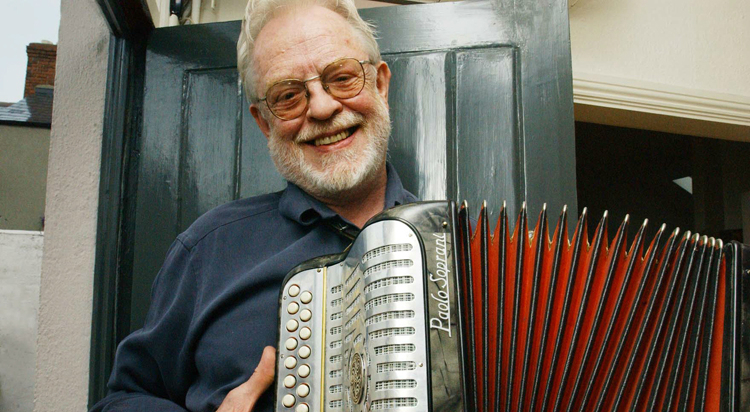
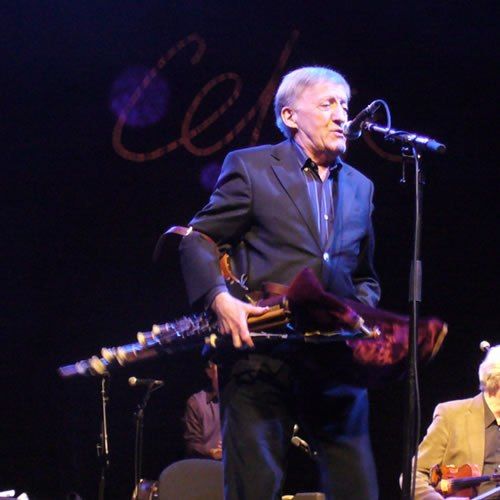
Two Irish music giants died last month. Tony Mac Mahon was a fervent guardian of the music traditions, an accordion maestro, a folklorist, and communicator par excellence. He lovingly championed the cultural riches of Irish music for his fellow citizens and shared that huge heritage with the world. Paddy Moloney was a genius and a musical entrepreneur, taking the ensemble structure initiated by Seán Ó Riada with Ceoltóirí Chualann to glorious and enduring heights with The Chieftains. With that ebullient band, he passionately presented the cornucopia of Irish music to the world, taking the music out of the pubs and into concert halls.

Both men leave behind immense cultural legacies, preserving and renewing melodic masterpieces and rare tunes, and seeding the revival of Irish traditional music. Mac Mahon was a collector, curator, broadcaster and often provocative commentator. Moloney was a brilliant band leader, a fine composer, and a generous musical partner.

Moloney was a master of the notoriously temperamental uilleann pipes, a skill characterized by the late Mícheál Ó Súilleabháin as akin to wrestling with an octopus. It’s fair to say he popularized octopus wrestling in many surprising corners of the world. Mac Mahon had a famously ambivalent relationship with the accordion and occasionally wished that he could have played the pipes, a more authentic traditional instrument, in his view.

Paddy Moloney’s life was celebrated recently on the RTE radio Rolling Wave show. One of his early achievements (sometimes forgotten with all his subsequent accomplished) was as CEO and producer for Claddagh Records. These included classic records like The Liffey Banks by Tommy Potts and The Star Above the Garter by Dennis Murphy and Julia Clifford. The role Moloney played in expanding Claddagh Records and the work of reinventing the label are described by Siobhán Long in a recent piece in the Irish Times. The Chieftains played regularly in the Bay Area and they were the last live concert I attended before the Covid lockdown in February 2020.

Moloney was often described as an ambassador for Irish music and culture but Mac Mahon had the equally vital role as emissary from the recent and not-so-recent past. He spoke for the vernacular Irish artists who kept the music alive during the worst of times, before and after the state achieved a measure of independence.

The Rolling Wave (another tune Mac Mahon favored) radio show also memorialized his contributions with praise and recollections from Liam O’Connor of the Irish Traditional Music Archive, Noel Hill, a musical partner and soul-mate, and Caoimhín Ó Raghallaigh who persuaded Tony to record Farewell to Music, his last album released on Raelach Records in 2016.

Mac Mahon, like Martin Hayes and Iarla Ó Lionáird, served as messengers from our traditional musical history, loyal spokesmen for the ancestors. His message was directed at Ireland and the Irish, his plea echoing Breandán Breathnach, that we love and respect the music because it is our own. Mac Mahon’s lifework may be viewed as a Tabharthas, an offering to the artists who preceded him and his peers. According to Manchán Magan’s fascinating book, Thirty-Two Words for Field, the term also means sacrifice. And there is little doubt that Mac Mahon sacrificed some parts of his life for his work. One of his favorite pieces was the lament The Wounded Huzzar and the title may have resonated with his experience.

O’Connor describes Mac Mahon as a force of nature, a sweet and forceful player who did not value technique but had tons of it. Noel Hill, who played with Tony on the classic recording, I gCnoc na Graí/Knocknagree, noted that their way of thinking about the music was very much aligned. They shared a sadness about what had gone before and the loss of the Irish language. And it could be heard in his playing. Caoimhin O’Raghalaigh said that Mac Mahon felt the real music is in the slow airs. He loved the sean-nós singers. His playing was like brushstrokes bringing out the dramatic depths and spaces in the tunes.

I never had the opportunity to meet Moloney in person, other than the time a few years back I saw him in his favorite Indian restaurant in Glasthule but chose not to intrude on him. I did have a phone interview with him once for a San Francisco Irish Herald article during one of the Chieftain’s almost annual U.S. tours. His “people” offered me ten minutes but Paddy was happy to talk for longer as he bemoaned the lack of proper tea in his Denver hotel room. He was naturally gracious and generous.

I had more time and interactions with Mac Mahon and count myself fortunate to have crossed paths with him as an aspiring music writer. I saw him play two extraordinary concerts with the Kronos Quartet at Stanford University in 2002 and at a Napa winery in 2003. David Harrington of the Kronos Quartet told me, “…when I hear something as remarkable and rare as Tony, I believe it. His playing has an extraordinary singing quality in the way he molds and shapes every note.” He was gracious and eloquent, eager to share his insights about the rich store of traditional music. He had an edge to him but his curmudgeon persona could be brilliant and funny.

He played a number of other concerts at smaller Bay Area venues during his 2002 visit. One was at the Resource Center for Non-Violence in Santa Cruz, hosted by Bob Breheny of the Celtic Music Society of Monterey and recorded by Pete Haworth of Molly’s Revenge fame. Tony was in fine form and partnered up with Japanese guitarist Junji Shirota, who has a refined ear for Irish traditional music. It was a magical evening and Tony responded wholeheartedly to the energy generated by an audience of aficionados who were very familiar with his oeuvre.

I was in attendance and later received the recording from Haworth. I treasure it and listen back frequently. And since it is better to listen to Mac Mahon play than read about him, here’s a rare live recording from that house concert in Santa Cruz. It’s the mournful air Amhrán na Leabhar

One track only whets the appetite so here’s another from the superb album, Mac Mahon from Clare from 2000. This old march, The Haughs of Cromdale, was recorded at Mac Mahon’s house in the Liberties with Barney McKenna, John Sheehan and Liam Ó Maonlaí. This is one of the tracks flagged by Paul O’Connor in his mind-blowing survey of Irish music available on Soundcloud, 200 tracks to mess with your idea of trad

Mac Mahon and Moloney had the benefit of growing up marinating in complete universes of traditional Irish culture, one rural and one urban, with music at the heart of it. Both men were strongly committed to uncovering and displaying the shapeliness of the harp tunes, the song-airs, and the music of great, largely unrecorded, older players. They worked at mastering the technical elements of their art and willingly absorbed the codes, customs, and wisdom embedded in that life. That’s what made them such credible messengers and advocates for the tradition. They will live long in our hearts and ears.

Richmond, California
U.S.A.